
AI News & Insights
AI Tool Evaluation Workflow for Small Teams in 2026
Small teams do not need to test every new AI product that appears in the market. They need a repeatable evaluation workflow that turns hype into a simple decision: adopt, watch, or ignore.
1. Start With the Workflow, Not the Tool
Before opening a trial, write down the exact job the tool should improve. Good examples include drafting SEO briefs, summarizing sales calls, generating landing page variants, reviewing code, or building a prompt library for repeat client work.
If the workflow cannot be described in one sentence, the test will usually become vague. A narrow workflow makes the result measurable and keeps the team from judging a tool only by its demo.
2. Score Tools Across Five Practical Criteria
- Output quality: Does it produce work that needs less editing than the current process?
- Speed: Does it reduce total time, including review and cleanup?
- Integration: Can the team use it inside existing documents, CMS, analytics, code, or support tools?
- Risk: Are data privacy, hallucination, copyright, and approval steps clear?
- Cost: Does the pricing make sense after the trial period ends?
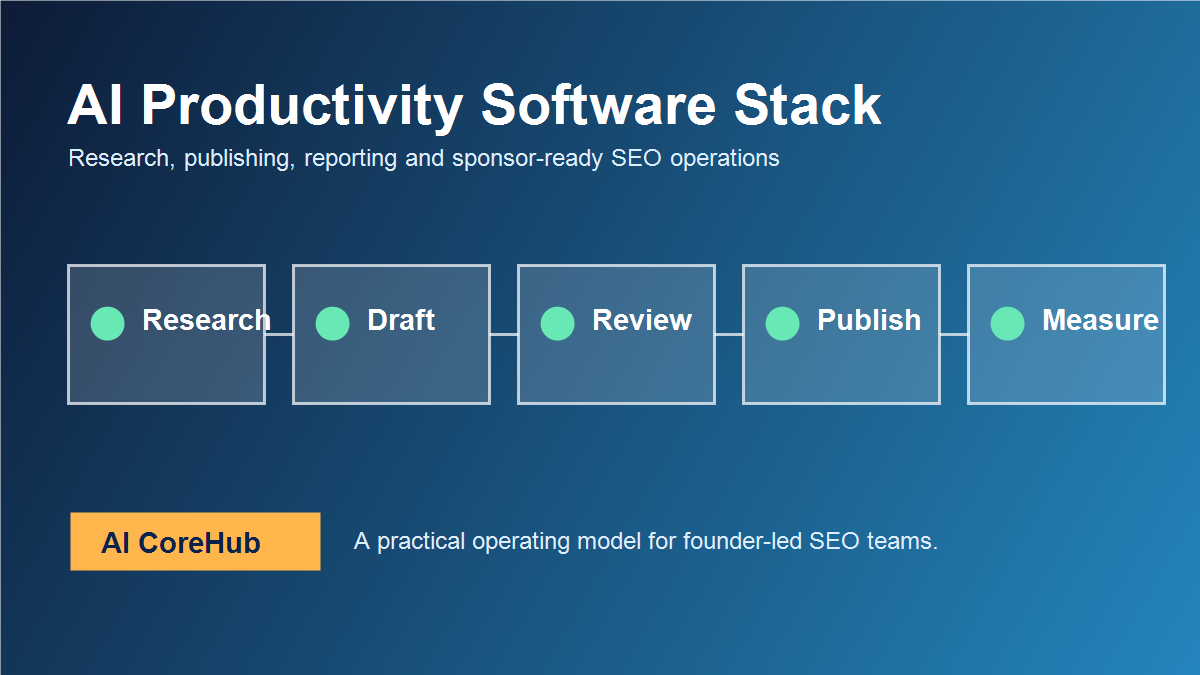
3. Use a Seven-Day Test
A useful AI trial can be short. Day one is setup and prompt design. Days two to four are real production tasks. Day five is quality review. Day six is documentation. Day seven is a decision meeting.
The best outcome is not always a purchase. Sometimes the result is a reusable prompt, a better SOP, or a clear decision to wait until the category matures.
4. Build an Internal Prompt and Evidence Library
Every AI test should leave behind assets: winning prompts, failed prompts, screenshots, output examples, review notes, and a short summary of when the tool should be used. This library compounds over time and helps new team members learn faster.
Bottom Line
For small teams, AI adoption should feel like operations work, not trend chasing. Evaluate fewer tools, test them against real workflows, document the result, and keep only the tools that create measurable leverage.
GROW WITH AI COREHUB
Promote an AI tool or strengthen your SEO visibility
Turn this research traffic into business visibility with AI tool submissions, sponsored content and niche-relevant backlink placements.© 版权声明
文章版权归作者所有,未经允许请勿转载。
相关文章



暂无评论...