AI Answer Engine Visibility Implementation Workflow for SaaS Teams
AI Answer Engine Visibility Implementation Workflow for SaaS Teams
AI answer engine visibility is no longer only a brand-awareness experiment for SaaS teams. Buyers now ask ChatGPT, Gemini, Perplexity and Google AI-style results to shortlist vendors, compare workflows and find trusted resources before they visit a traditional search result. This page turns the broader topic into an implementation workflow: what to publish, how to structure proof, which pages should support the campaign and how a lean SaaS team can connect answer visibility with pipeline without creating thin, repetitive content.
The practical goal is to help a founder, marketer or SEO operator decide what to fix first. AI CoreHub should not publish another generic definition page when the stronger opportunity is a workflow page that explains the steps, internal links and commercial next action. Readers who need broader tool discovery can start with the AI tools directory, while teams planning topical support can compare related resources in AI tool collections. This page is focused on the operating system behind those resources: how to make them useful enough for readers and clear enough for search engines to keep in the index.
Who this is for
This workflow is for SaaS teams that already have a product, a few customer proof points and a need for qualified discovery traffic. It fits early-stage founders who cannot wait for a full enterprise SEO program, content teams that need better internal linking discipline, and agencies that want to package AI discovery work without overpromising rankings. It is also useful for tool makers preparing a profile or sponsored placement on AI CoreHub, because it explains the evidence that makes a listing more persuasive.
The page is intentionally narrow. A general page about answer engines can become too broad to rank, too similar to every other AI SEO article and too weak to convert. A workflow page can be more useful because it describes the sequence: choose the buyer question, map the supporting pages, add verifiable proof, connect the commercial CTA and check that the page is technically crawlable. When those pieces are missing, Google may discover the URL but decide not to index it because the page does not add enough unique value.
Practical use cases
The first use case is a founder-led content sprint. A founder can list the ten questions prospects ask before buying, then turn each question into one deep page with a clear answer, a comparison angle and a next step. The page should point to relevant AI CoreHub resources such as AI News & Insights for context and 外链推广市场 when the reader is evaluating visibility channels. This keeps the reader inside a logical path instead of sending them through isolated short posts.
The second use case is sponsored discovery. A SaaS company that wants a promoted resource should not only buy a placement and hope for clicks. It should prepare a clean product description, screenshots, use cases, audience notes and proof that the offer is relevant to AI, SEO or workflow buyers. That evidence can support a listing, a comparison article or a campaign page. Sponsors can review 广告合作方案 after they understand which page type matches their goal.
The third use case is index recovery. If a site has many discovered-but-not-indexed URLs, the team should stop producing near-duplicate pages and improve the highest-value URLs first. A repair pass should add original body copy, a relevant image, internal links, clearer headings and a stronger commercial reason for the page to exist. The output should read like a useful resource, not a block of filler text added only to pass a character count.
Implementation workflow
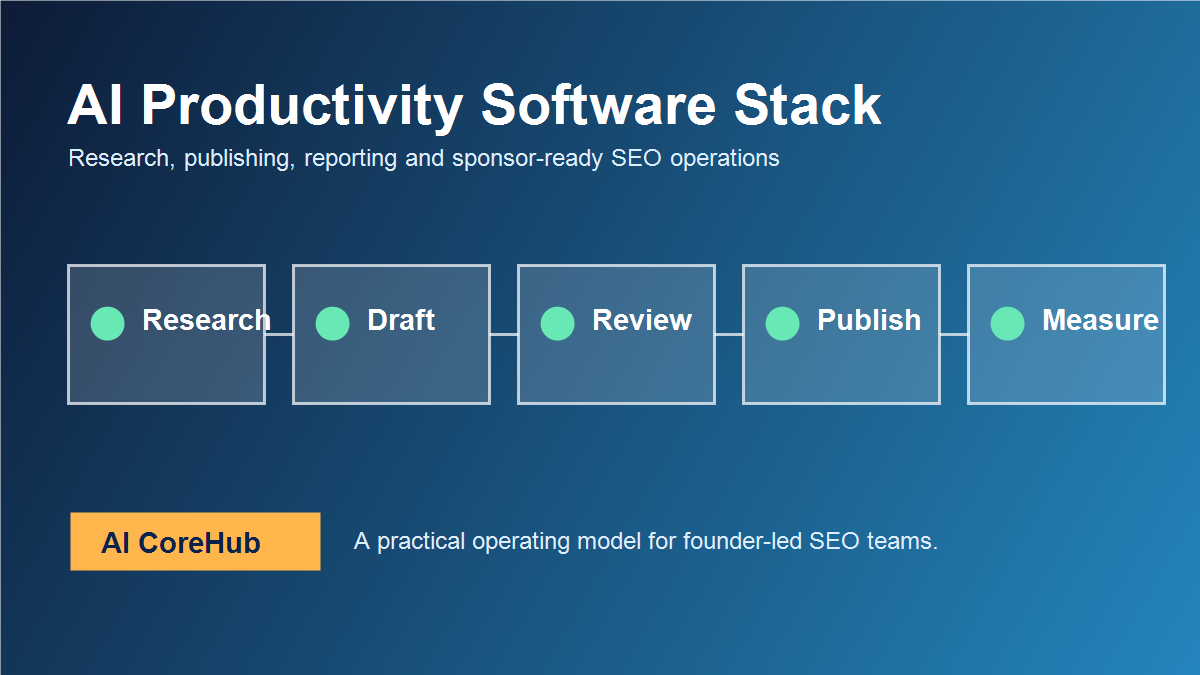
Start with one buyer question. For this page, the question is: how should a SaaS team implement AI answer visibility without creating thin content? The answer begins with a topic map. Put commercial pages, tool pages, educational pages and comparison pages into separate roles. Commercial pages should explain packages, service boundaries and conversion options. Educational pages should explain workflows and decision criteria. Resource pages should help readers compare tools or assets. This separation keeps the site from publishing five pages that all compete for the same vague keyword.
Next, create a proof block. A proof block can include customer segments, example workflows, checklist criteria, screenshots, product facts, editorial notes or measurement ideas. For AI CoreHub, a useful proof block often explains who the resource is for, what task it supports, what the reader should check before choosing a tool and what action should come next. That structure gives Google more unique text to evaluate and gives readers more confidence to continue.
Then add internal links only where they make sense. The best links in this workflow are not repeated exact-match anchors. They are helpful routes. A page about AI answer visibility can naturally point readers to the 提交AI工具 page if the reader is a vendor, to commercial packages if the reader wants promotion, and to relevant content hubs if the reader wants education. Internal links should be part of the explanation, not a list pasted at the bottom.
Evaluation checklist
Before publishing or updating a page, check whether the page has a unique search intent, at least one useful visual, enough original body text, a self-explanatory title and a stable slug. The slug should describe the evergreen topic, not the publishing date. The body should contain practical sections that a human reader would scan: who it is for, when to use it, how to evaluate the choice and what to do next. If a page only changes a few words from another page, it should be merged, redirected or repositioned with a narrower angle.
Technical checks matter too. The page should return HTTP 200, avoid noindex, use a self-referencing canonical or an intentional canonical target, and appear in the clean sitemap only if it deserves indexing. The body should not contain AI CoreHub internal links that are marked nofollow or external. On this site, relative internal links are safer because they avoid theme-level external-link handling that can accidentally weaken the crawl path.
Commercial next step
For SaaS teams, the commercial next step is to decide whether the immediate goal is discovery, authority or lead capture. Discovery usually fits a tool listing or collection placement. Authority fits a practical guide, comparison or research-backed article. Lead capture fits a sponsored package or backlink marketplace page that explains buyer fit and expected deliverables. The strongest campaigns connect all three with one clear path: useful article, relevant internal links, visible CTA and a landing page that explains the offer without hiding the details.
If your team wants AI CoreHub visibility, prepare the basics before submitting: product URL, target audience, best use cases, screenshots, category tags, proof points and the preferred landing page. A complete submission helps the editorial page become more useful, and useful pages have a better chance of earning impressions, internal clicks and qualified inquiries over time.
GROW WITH AI COREHUB
Promote an AI tool or strengthen your SEO visibility
Turn this research traffic into business visibility with AI tool submissions, sponsored content and niche-relevant backlink placements.© 版权声明
文章版权归作者所有,未经允许请勿转载。
相关文章





暂无评论...