
Secure AI Knowledge Storage Workflow for Distributed Teams
Why AI teams need a secure knowledge storage workflow
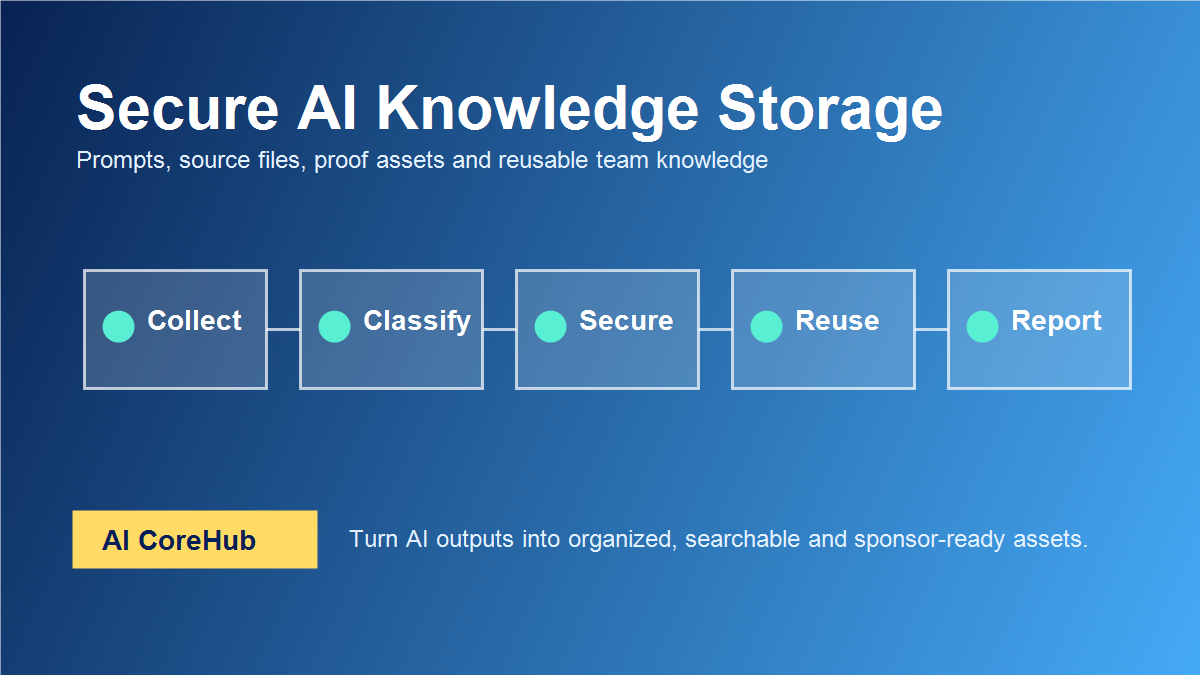
AI work creates more reusable knowledge than many teams realize. Prompts, screenshots, source files, client notes, research summaries, draft comparisons, sponsored listing assets and reporting documents all become useful again if they are stored correctly. When they are scattered across chat windows, local folders and personal drives, the team loses context and creates the same material repeatedly. A secure storage workflow turns those fragments into assets that can support publishing, indexing, sales and client delivery.
For AI CoreHub, this topic belongs between cloud storage, tool discovery and commercial readiness. A reader can start by understanding storage operations, then continue into the AI tools directory, compare workflow options in curated AI collections, read editorial context in AI News & Insights, and decide whether a product is ready for a sponsored route through the 外链推广市场 or 广告合作方案.
Who this is for
This workflow is for distributed SEO teams, AI founders, content operators, agencies and SaaS marketers who handle many small assets every week. It is especially relevant for teams that use AI to produce drafts, research notes, briefs, landing page copy, outreach ideas and product comparison material. Without a storage structure, those outputs become temporary. With a structure, they become a durable knowledge base that can improve future pages and campaigns.
The workflow also helps sponsors. A sponsored placement performs better when the advertiser can provide a clear product URL, screenshots, use cases, audience notes, proof points, pricing context and desired success metric. If those pieces already live in a shared storage system, the campaign can be reviewed faster and placed in a more relevant context. That is better for the sponsor, the publisher and the reader.
Practical use cases
The first use case is editorial production. A small team can create one folder or workspace for each article or tool page. That workspace should contain the working brief, image source, final image, internal link plan, title and meta notes, screenshots, proof points and the final URL after publishing. This keeps every page easier to update later, which matters when Google discovers a page but delays indexing because the page looks thin or incomplete.
The second use case is sponsored discovery. A sponsor-ready folder should contain product positioning, target audience, brand assets, acceptable anchor ideas, placement boundaries and conversion goals. The body of a commercial article should still use AI CoreHub internal links, but the sponsor proof folder gives the editor enough information to write a more useful placement. This avoids shallow paid pages and improves trust.
The third use case is client or team reporting. AI outputs can help summarize performance, but the underlying evidence should be stored in a clear place. Traffic screenshots, 搜索 Console notes, article URLs, image files, outreach records and improvement tasks should be organized by page and campaign. This makes future reporting faster and helps the team identify which content clusters are supporting revenue.
Evaluation checklist
Start by checking access control. Not every team member needs access to every client file, sponsor note or editorial draft. A useful cloud storage workflow should support shared folders, role-based access, version history and easy removal of old permissions. For teams handling sponsor materials, this is not a small detail. It protects trust and reduces accidental exposure of private assets.
Next, check retrieval. If a team cannot find a prompt, brief, image or proof note within one minute, the storage structure is too vague. Use consistent folder names, stable article slugs, clear file names and short notes that explain why an asset exists. The slug should match the page topic where possible, because that makes it easier to connect storage assets to published URLs.
Then check publishing readiness. A folder is ready when it includes a relevant image, descriptive alt text, article outline, internal link targets, CTA direction and a short summary of buyer intent. That preparation helps the team publish stronger pages and reduces the risk of uploading mismatched images or building pages without enough standalone value.
Finally, check commercial fit. If a resource supports sponsor or backlink sales, it should explain who the buyer is, what problem is being solved, what proof exists, how results will be measured and what next action makes sense. A content asset that cannot answer those questions may still be useful internally, but it is not ready to support a commercial page.
How to choose storage tools for AI work
Choose storage tools around workflow needs rather than brand familiarity alone. A simple team may only need shared folders, permissions and version history. A larger team may need document search, audit logs, approvals, knowledge base integrations and structured metadata. The most important requirement is not complexity. It is whether the storage system makes AI-assisted work easier to reuse and verify.
For AI CoreHub, storage content should connect naturally with tool evaluation. If a page discusses secure storage, it should also route readers toward relevant tool categories and business actions. A founder with a storage or productivity product can use 提交AI工具 when the product has enough proof assets. An advertiser can review commercial placement options after preparing campaign materials. A reader who wants more editorial guidance can continue through AI CoreHub’s insight pages.
Next step
The next step is to create a repeatable folder template for every AI CoreHub content or sponsor project. Include a brief, image, internal link plan, proof notes, CTA direction, final URL and update log. This small process makes each page easier to refresh, easier to defend as original content and easier to connect with revenue pages. It also gives the team a practical way to improve existing pages instead of constantly adding thin new URLs.
For sponsors and AI founders, the takeaway is simple: organize your proof before requesting exposure. A clean asset folder helps editors understand the product, write a better placement and route readers to the right next step. That discipline supports indexing quality, protects trust and makes sponsored discovery easier to sell without weakening the editorial value of the site.
GROW WITH AI COREHUB
Promote an AI tool or strengthen your SEO visibility
Turn this research traffic into business visibility with AI tool submissions, sponsored content and niche-relevant backlink placements.© 版权声明
文章版权归作者所有,未经允许请勿转载。
相关文章


暂无评论...